Text or Call us at (212) 371-5788START HERE
Mind-BodyResultsSTART HERE →

Non-Surgical Lower Back Pain Treatment in NYC & Westchester Lower Back Pain. Deconstructed.

At Body in Balance Chiropractic, we identify the hidden posture, pressure, and stability imbalances driving your lower back pain — then rebuild the support system your lower back depends on with a non-surgical, drug-free MAPS™ approach.
⭐ 4.9 Rating · 200+ Verified Google Reviews
Start Your Free Consultation →15-minute phone consult to see if MAPS™ is the right fit.
See How MAPS™ Works →
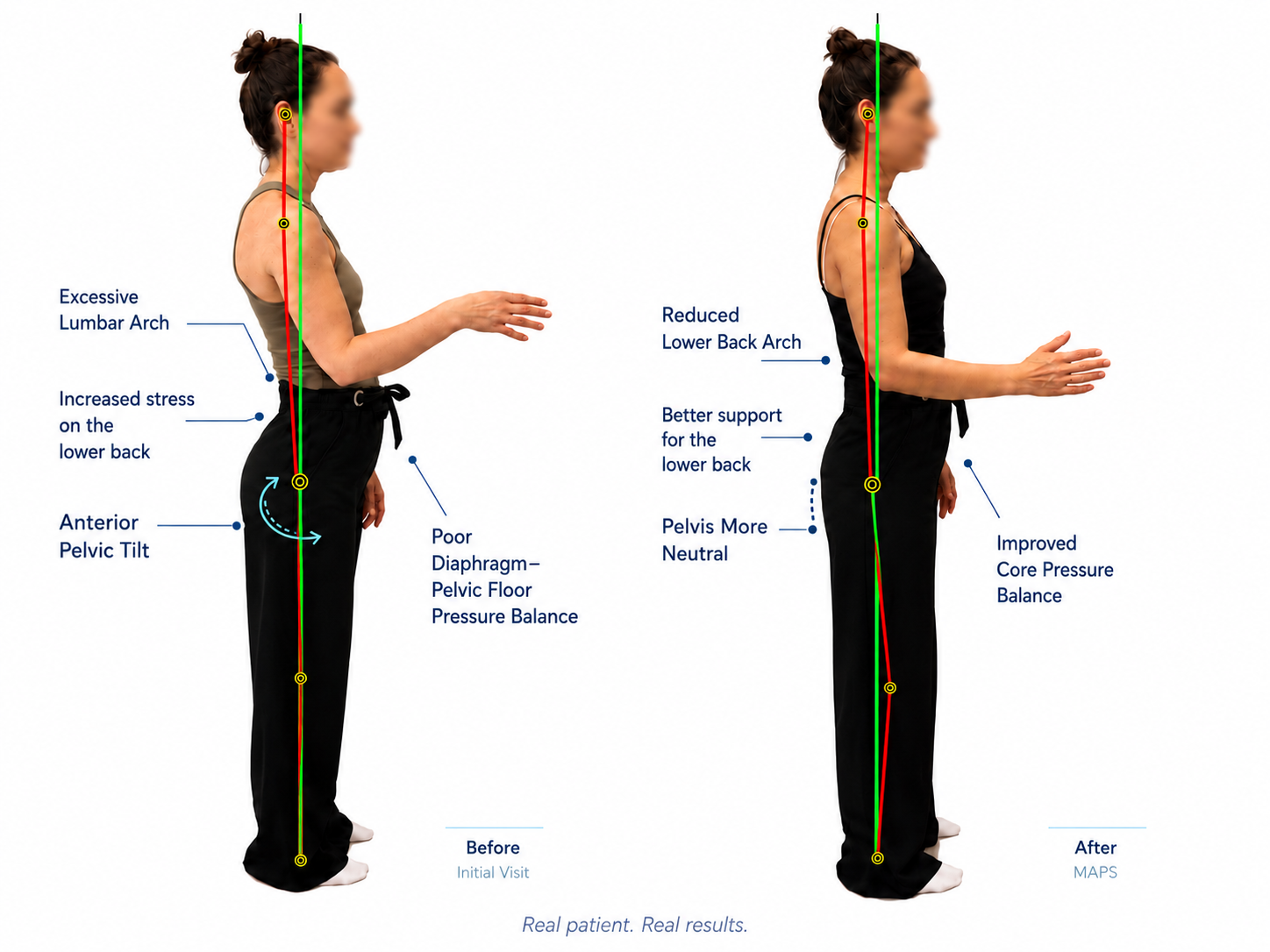
Before and after posture analysis showing anterior pelvic tilt, lower back stress and improved MAPS posture correction
Real patient before-and-after posture transformation. Results vary by patient.
BODY IN BALANCE CHIROPRACTIC

Non-Surgical Lower Back Pain Treatment in NYC & Westchester

Body in Balance Chiropractic provides lower back pain treatment in Midtown Manhattan and Westchester for patients with acute and chronic lower back pain, sciatica, disc herniation, bulging discs, SI joint pain, and posture-related back pain. Founded by Dr. Jan Lefkowitz, the practice is built around the MAPS™ Protocol — a proprietary system that combines precise chiropractic care, myofascial therapy, objective posture and muscle scanning, and brain-body retraining to rebuild the hidden stability system your lower back depends on.

Why it keeps coming back

Your Lower Back Is Often the Area Paying the Price

The painful spot is real. But the lower back is often the final stress point in a bigger compensation pattern.

When the spine, pelvis, hips, rib cage, fascia, posture, and deep stability system are not sharing the load properly, the lower back has to stabilize for everyone. It braces. It guards. It compresses. Eventually, it hurts.

That is why treatment focused only on the painful area may help for a while, but not fully hold. The pain can decrease, but the same overloaded pattern may still be running underneath.

A disc bulge, herniation, degeneration, arthritis, or stenosis may show where stress accumulated over time. But imaging does not always explain why the stress was there in the first place.

The pain is the alarm.

MAPS™ looks for the pattern setting it off — not just the area making noise.

You are not your MRI.

A disc finding may explain where stress accumulated. It does not always explain why the lower back was forced to absorb that stress.

The missing piece is support.

When the body cannot create stability from the inside out, the lower back has to work harder than it was designed to.

The MAPS™ breakthrough

The Key to Unlocking Your Lower Back Is a Hidden Hydraulic Pressure System in Your Abdomen.

The key to lower back stability is hydraulic pressure: the internal support created when your diaphragm, pelvic floor, deep core, glutes, fascia, pelvis, and spine work together.
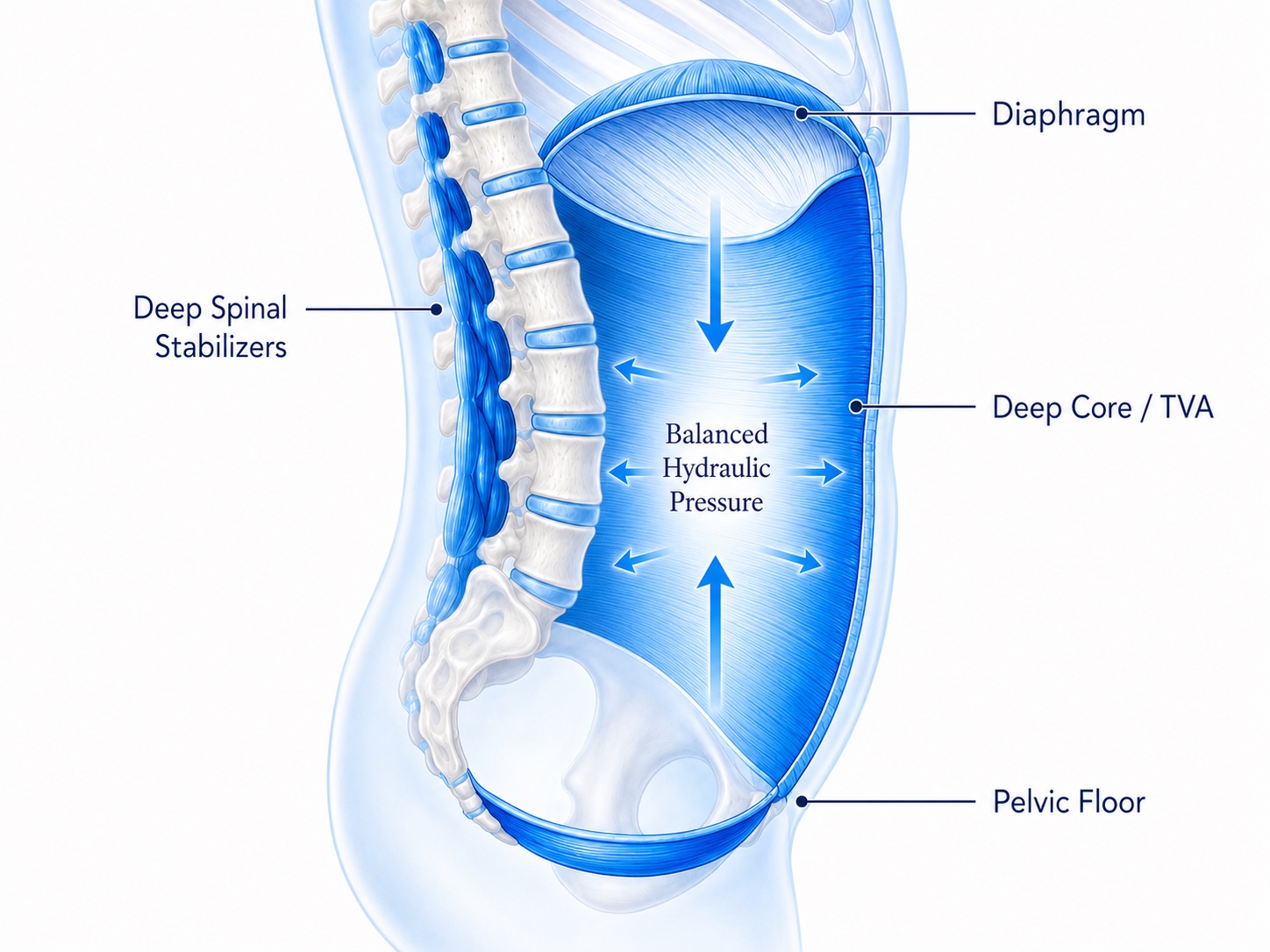
Balanced hydraulic pressure system showing diaphragm, pelvic floor, deep core, and spinal stabilizers supporting the lower back

The Abdominal Support Canister

Your trunk works like a coordinated pressure system.

Roof Diaphragm
Floor Pelvic floor
Walls Deep core + spinal stabilizers
Result Internal pressure that stabilizes the spine

When the roof, floor, and walls coordinate properly, pressure builds through the trunk and the lower back does not have to work as hard. When this system falls out of balance, the lower back starts doing too much.

Your brain coordinates this entire pressure and stability system. MAPS™ identifies where pressure, alignment, and muscular control are breaking down, then retrains how your nervous system coordinates support so your spine can stabilize with less strain.

Restoring this stability is a powerful way to heal lower back pain. As your posture changes and your body becomes more supported, you can move better, look more balanced, create lasting stability, and trust your body again.

How MAPS™ rebuilds it

How MAPS™ Rebuilds the Support System Your Lower Back Depends On

MAPS™ works by correcting the major layers that control how your lower back absorbs stress: alignment, fascia, deep stability, and automatic movement control. The brain-based component retrains how your nervous system coordinates these layers as one support system.

Map the Pattern

Spinal muscle scanning, posture analysis, and movement assessment show how your body is compensating and why your lower back is being overloaded before we build the plan.

Restore Alignment and Release Fascia

Precise chiropractic care helps improve spinal and pelvic alignment, while targeted myofascial work reduces restrictions that can pull your spine and pelvis out of balance and keep stress on the lower back.

Retrain the Deep Stability System

Your custom MAPS™ home exercise protocol uses precise, progressive movement patterns to neurologically retrain the coordination between the diaphragm, pelvic floor, deep core, glutes, and spinal stabilizers. Through repetition, your brain learns a more efficient strategy for supporting the lower back.

Help Stability Become Automatic

As the new pattern becomes more familiar to your nervous system, stability requires less conscious effort. The goal is for your body to coordinate support for the lower back more naturally as you stand, move, and go through daily life.

Real patient results

Lower Back Pain Patients Who Finally Found a Different Approach

Once the deeper support system is rebuilt, patients often describe a different kind of result: less pain, more strength, better movement, and more confidence in their body.

★★★★★

“After a skiing accident, finding the right team to help me tackle my back, posture and alignment issues plagued me for 3 years. A handful of spine doctors and PTs, dozens of hours, and thousands of dollars later I still wasn't making progress. Body in Balance changed all of that. Their comprehensive and personalized MAPS approach is well rounded and helped me tackle my own issues from the root cause. I'm finally finding lasting relief and starting to hit new heights with my strength, athleticism and overall well-being.”

Brian R.
Chronic back pain after skiing accident
★★★★★

“I came to Body in Balance looking for treatment for chronic lower back and glute pain due to a herniated disc pinching a sciatic nerve. I had tried cortisone shots, acupuncture, and physical therapy. none had managed to relieve my symptoms. After two months of treatment, I was pain free and feeling stronger than I have in years. Very few providers combine exercise and adjustments in this fashion. The posture training helped me understand and address the deeper causes of my symptoms.”

Meir H.
Herniated disc · Sciatica · Low back/glute pain

Want to read more stories from real patients?

See All Patient Stories →
The bigger goal

The Goal Is Bigger Than Pain Relief

When your stability system begins working again, your spine has more support. Your posture changes. Your body can look stronger, younger, and more balanced. Movement feels easier.

You become more athletic. You stop guarding every bend, workout, long drive, or walk through the city. You stop worrying about your back and start trusting your body again.

See All Posture Transformations →
Conditions and related pain patterns

Lower Back Pain Conditions We Treat in NYC & Westchester

Lower back pain is not one single condition. It can come from irritated joints, discs, nerves, muscles, fascia, posture, spinal degeneration, or a deeper stability problem that keeps overloading the same area. At Body in Balance Chiropractic, we look beyond the painful spot to understand the full compensation pattern behind your pain.

Acute Lower Back Pain

Sudden lower back pain can happen after lifting, bending, twisting, exercising, sitting too long, or simply moving the wrong way.

How we help: We restore spinal and pelvic alignment, relieve pain and guarding, and identify the compensation pattern that made the lower back vulnerable.

Read more

Acute lower back pain often feels like it came out of nowhere, but the flare-up may be the final event in a longer compensation pattern. A foot or arch imbalance, hip restriction, pelvic shift, fascial tension, postural distortion, or deep stability problem can change how force moves through the body until the lower back becomes the stress point.

We assess the painful area carefully, then look above and below it to understand why it could not tolerate the load and what may be driving the spinal or pelvic misalignment underneath the episode.

Chronic Lower Back Pain

When lower back pain keeps returning, the painful area may be carrying stress created by a larger mechanical and stability problem.

How we help: MAPS™ addresses spinal and pelvic alignment, fascial tension, and the deep hydraulic stability system that supports the spine.

Read more

Medication, massage, physical therapy, or a few chiropractic adjustments may provide meaningful relief, but if the deeper mechanical and stability problems remain, the same stress can keep returning to the lower back.

MAPS™ looks beyond the painful area to identify what has been perpetuating the problem. We evaluate the full kinetic chain, including the feet and arches, hips, pelvis, rib cage, posture, and fascia, while retraining the deep pressure system that supports the spine. The goal is to correct the alignment and also address what may be repeatedly pulling the body back out of alignment.

Sciatica

Sciatica can cause shooting pain, burning, numbness, or tingling from the lower back into the hip, glute, leg, or foot. It can have several different mechanical causes, so the first step is identifying what is actually irritating the nerve.

How we help: We look beyond the irritated nerve to identify the mechanical and stability pattern that may be feeding that stress.

Read more

Sciatica is a nerve irritation pattern, but the nerve may be stressed by more than one local structure. Disc loading, pelvic rotation, hip restriction, foot and arch mechanics, muscle guarding, fascial tension, and posture can all influence how much irritation the nerve experiences.

We assess neurological signs first, then trace the compensation chain that may be increasing pressure around the sciatic pathway or repeatedly pulling the spine and pelvis out of alignment.

Herniated or Bulging Disc-Related Pain

A herniated or bulging disc can cause lower back pain, spasms, or shooting pain, numbness, tingling, burning, or weakness into the leg.

How we help: We work to reduce pressure on the injured area by restoring spinal and pelvic alignment and rebuilding the stability system that supports the spine.

Read more

Cortisone injections and medications can reduce pain and inflammation, but they do not correct the mechanical forces that may be continuing to overload the disc.

MAPS™ works to change those forces by restoring spinal and pelvic alignment, balancing fascial tension, and rebuilding the deep stability system that supports the spine. That includes retraining the diaphragm, pelvic floor, deep core, and spinal stabilizers to create better hydraulic pressure and support, while also addressing the full kinetic chain that may be contributing to the disc overload.

SI Joint Pain

SI joint pain often feels one-sided, deep, sharp, or unstable around the lower back, pelvis, sacrum, hip, or glute.

How we help: We restore pelvic and spinal alignment while addressing the larger load-transfer pattern that may keep irritating the joint.

Read more

The SI joint sits between the spine and pelvis, so it is heavily influenced by what happens above and below it. A collapsed foot arch, altered gait, hip imbalance, pelvic rotation, glute inhibition, rib position, fascial restriction, or deep core coordination problem can all affect how force passes through the joint.

We look at the SI joint itself, but we also correct the larger load-sharing system that may be pulling the pelvis back out of alignment or repeatedly overloading the area.

Back Muscle Spasms

Back spasms are often a protective response to instability, overload, irritation, or sudden strain.

How we help: We look for the mechanical reason the body is guarding, including spinal and pelvic alignment, fascia, and deep stability.

Read more

A spasm is often the nervous system trying to splint an area it does not trust. If we only loosen the tight muscle without asking why the body is guarding, relief may not hold.

MAPS™ looks for the reason the lower back feels mechanically unsafe. That may include spinal or pelvic misalignment, fascial restriction, poor pressure control, foot and arch compensation, hip dysfunction, posture, or a deep stabilizing system that is not coordinating support.

Spinal Arthritis and Degenerative Changes

Arthritis, disc narrowing, and other degenerative changes can become more symptomatic when the spine is poorly supported or overloaded.

How we help: We cannot reverse degeneration, but we can improve alignment and reduce unnecessary mechanical stress on sensitive joints.

Read more

Degenerative findings are common, especially as people get older, but imaging does not always explain why one person hurts and another does not. The key question is how your body is loading those arthritic or degenerative areas.

If the feet and arches, pelvis, hips, rib cage, fascia, posture, or deep stabilizers are not sharing load effectively, the lower back may absorb more stress than it should. MAPS™ works to improve that mechanical environment and the support system around it.

Spinal Stenosis-Related Pain

Spinal stenosis can contribute to lower back pain, leg symptoms, heaviness, or discomfort with standing and walking.

How we help: When conservative care is appropriate, we improve spinal and pelvic mechanics to reduce avoidable stress around the narrowed region.

Read more

Stenosis is a structural narrowing, but symptoms can be strongly influenced by how the spine is positioned and loaded. Postural distortion, pelvic position, hip restriction, foot and arch mechanics, fascial tightness, and weak postural support can all change the amount of stress around the narrowed area.

We assess carefully and refer when needed. When conservative care is appropriate, we work to improve alignment and the full-body mechanics that affect the spinal environment.

Postural Lower Back Pain

Anterior pelvic tilt, rib flare, excessive arching, flat-back patterns, and poor deep-core coordination can all increase strain on the lower back.

How we help: MAPS™ restores alignment and fascial balance, then retrains the brain to better coordinate the deep stability system that supports the spine and posture.

Read more

True postural stability depends heavily on coordinated hydraulic pressure within the abdomen, created by the diaphragm, pelvic floor, deep core, and spinal stabilizers working together under neurological control. You cannot fix posture by simply strengthening individual muscles with a fitness approach.

We address spinal and pelvic alignment and fascial restrictions, then use a customized home retraining protocol to retrain the brain to coordinate this deeper stability system more effectively. The goal is not to consciously hold better posture, but to restore the control that allows better posture and spinal support to happen more automatically.

Pain With Sitting, Standing, Walking, or Bending

Many people do not have constant pain. They have pain with specific activities that reveal how the body is loading the lower back.

How we help: We use the activity that triggers pain to identify where alignment and stability are breaking down, then rebuild the larger support pattern.

Read more

Sitting, standing, walking, and bending expose different parts of the compensation pattern. Sitting may reveal disc or hip stress. Standing may reveal postural compensation or poor pressure control. Walking may expose foot and arch, hip, pelvic, or glute instability. Bending may reveal poor spinal control or a missing hip hinge.

Rather than treating every lower back pain case the same way, MAPS™ uses these clues to restore spinal and pelvic alignment and understand the full kinetic-chain, fascial, and stability patterns behind the pain.

Whether your lower back pain is acute, chronic, disc-related, nerve-related, posture-related, or tied to years of compensation, our goal is the same: relieve the pain, rebuild the support system underneath it, and teach your body how to hold the correction.

NYC and Westchester

Lower Back Pain Treatment in Midtown Manhattan and Westchester

Body in Balance Chiropractic provides lower back pain treatment in Midtown Manhattan and Westchester.

Midtown Manhattan

Lower Back Pain Chiropractor in Midtown NYC

Our Midtown NYC office is convenient for patients searching for a lower back pain chiropractor near Grand Central, Bryant Park, Rockefeller Center, Times Square, and Midtown Manhattan.

Westchester

Lower Back Pain Treatment in Westchester, NY

Our Purchase office serves patients from across Westchester, including Bedford, Scarsdale, Rye, Harrison, White Plains, Armonk, Greenwich, CT, and surrounding communities.

FAQ

Lower Back Pain Treatment FAQ

Why does my lower back pain keep coming back?

Lower back pain often returns when the painful area is being forced to do too much because another part of the kinetic chain is out of balance. The deeper issue may involve your feet, arches, pelvic alignment, hip control, posture, fascia, spinal muscle activity, and the hydraulic pressure system that should support the spine. That is why we look beyond the lower back, including scanning the feet for imbalances that may be affecting pelvic position and loading the spine. MAPS™ is designed to identify that full-body compensation pattern and rebuild the support system behind it.

How is Body in Balance different from a typical chiropractor or physical therapist for lower back pain?

Most care starts by treating the area that hurts. Body in Balance starts by measuring the larger pattern with spinal muscle scanning, digital posture analysis, and foot/postural assessment. Then we combine precise chiropractic care, soft tissue work, healing technology, and a custom MAPS™ home retraining protocol: targeted movements that teach the diaphragm, pelvic floor, deep core, glutes, pelvis, and spinal stabilizers to coordinate support. The goal is to help the body hold the correction instead of repeatedly falling back into the same compensation pattern.

What should I do if my lower back suddenly goes out and I can barely move?

If your lower back suddenly goes out and you can barely move, the first step is to get properly assessed so we can determine whether conservative care is appropriate or whether imaging or medical referral is needed. When it is appropriate to treat, we use gentle manual therapy, careful positioning, low-level laser when indicated, and guided movement strategies to help reduce pain, decrease guarding, and restore enough stability for you to begin moving safely again. The goal is to help your lower back settle down, identify what caused the episode, and begin rebuilding the support system that helps prevent the same pattern from returning.

What if my MRI shows a disc bulge, herniation, degeneration, arthritis, or stenosis?

MRI findings are helpful, but they do not always explain why the lower back became overloaded in the first place. We do not promise to erase structural findings on imaging. Our goal is to improve alignment, pressure balance, stability, and movement control so abnormal stress on the lower back can decrease and function can improve.

Can you help with sciatica or pain that travels down the leg?

Many patients come to us with sciatica, pain into the hip or glute, or discomfort traveling down the leg. We evaluate how the lower back, pelvis, hips, posture, and stability system may be contributing to the irritation, then build a plan around the pattern we find.

Why did PT, chiropractic, or massage only help temporarily?

Those approaches can all be helpful, but results often fade when the body’s deeper compensation pattern is not identified and retrained. MAPS™ is different because we look at how your alignment, fascia, posture, core pressure system, and deep stabilizers are interacting as one system. Then we combine precise hands-on care with a custom home retraining protocol so your body can learn a new support strategy instead of falling back into the same pattern that overloaded your lower back in the first place.

Does core strengthening fix lower back pain?

Core strengthening can help, but lower back pain is rarely solved by strength alone. You can have strong abs and still have rib flare, excessive lumbar arch, anterior pelvic tilt, poor pressure control, and a lower back that keeps getting overloaded. The key is not just making the core stronger — it is teaching the brain how to coordinate the diaphragm, pelvic floor, transverse abdominis, obliques, multifidus, glutes, pelvis, and spine as one stability system. That is a major difference in the MAPS™ approach. We train core control as well as core strength, so your body learns how to create support from the inside out — and your lower back does not have to keep doing the work alone.

Do I need an MRI or X-ray before starting lower back pain treatment?

Not always. Many people begin conservative care without an MRI or X-ray, especially when symptoms are mechanical and there are no concerning neurological signs. If your history, exam, or symptoms suggest that imaging or medical evaluation is needed, we will tell you and guide you appropriately.

Do you offer non-surgical, drug-free lower back pain treatment?

Yes. MAPS™ is a conservative approach for lower back pain that combines precise chiropractic care, myofascial therapy, objective posture and muscle scanning, and one-on-one stability retraining. It is designed for people looking for a non-surgical, drug-free way to address the movement, alignment, posture, and stability problems that can keep lower back pain coming back.

Can a herniated disc heal without surgery?

A herniated disc is an injury to the disc itself, and we do not claim to “heal” or reverse the disc directly. Our role is to understand why that injured area is being overloaded and determine whether conservative care is appropriate.

At Body in Balance Chiropractic, Dr. Jan Lefkowitz brings 25+ years of clinical experience helping patients with lower back pain, disc-related pain, and sciatica. We carefully assess your symptoms, neurological signs, posture, spinal alignment, movement patterns, and stability system. If imaging is needed, or if your symptoms suggest something outside our scope, we refer you for the appropriate medical evaluation.

When conservative care is appropriate, the goal is to take pressure off the injured area by improving spinal alignment, reducing muscle guarding, restoring core pressure control, and rebuilding the stability system around the lower back and pelvis. We may also use specialized low-level laser therapy to help safely reduce pain and inflammation and help the irritated area recover.

That is the MAPS™ approach: not chasing disc pain alone, but rebuilding the system that determines how much stress your lower back has to absorb.

Will I have to keep coming forever?

The goal of MAPS™ is independence, not lifelong dependence on treatment. We want you to understand your compensation patterns, learn the movements that help correct them, and build the strength and control to maintain your results outside the office.

Start here

Ready to Stop Living Around Your Lower Back?

Whether your lower back suddenly went out or the pain has been returning for years, we’ll help you understand what is driving the problem and what your options are.

At Body in Balance Chiropractic, we help patients relieve lower back pain, understand why it happened, and rebuild the deeper support system that helps results hold.

Start Your Free Consultation →
Midtown Manhattan & Westchester · MAPS™ Protocol · 4.9★ Google rating